Resources
How aluminium extrusion works, billet to profile
Published 2026-07-22
Almost every aluminium profile in a building façade, a solar frame or a machine guard started life the same way: as a solid cylinder of alloy pushed through a shaped steel die. Understanding the process helps you write better specifications and ask the right questions of any supplier. Here is how it works on our lines.
The starting point: billet and die
Extrusion begins with two things — a billet and a die. The billet is a solid cylinder cut from a cast aluminium log, in the alloy the order calls for (for our profiles, usually 6060, 6063, 6005A or 6082). The die is a hardened steel disc with the profile's cross-section cut through it; it defines every wall, groove and chamber of the final shape.
Both are preheated before the press: the billet to roughly 400–500 °C, hot enough to flow under pressure without melting, and the die so the first metre extruded flows as evenly as the last. Die condition is checked before mounting — a worn or damaged die shows up immediately as lines and tolerance drift on the profile surface.
Through the press
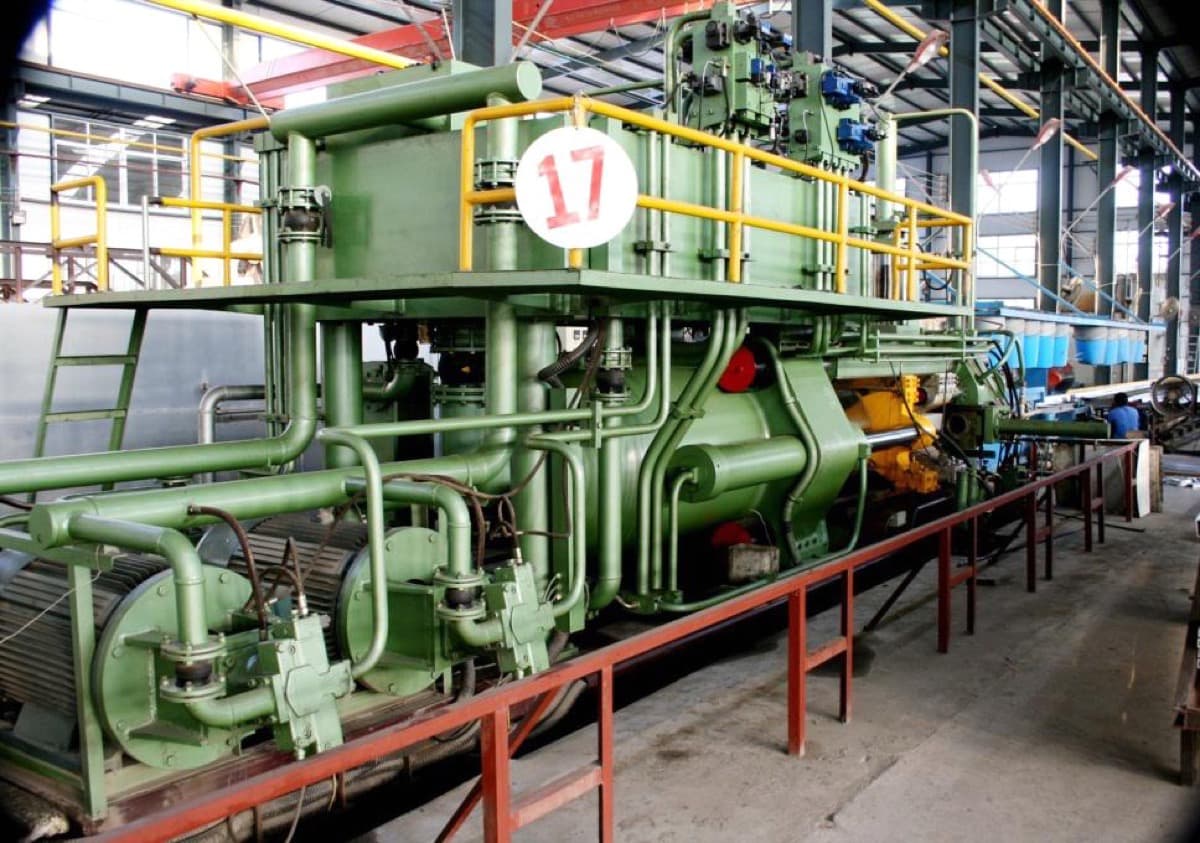
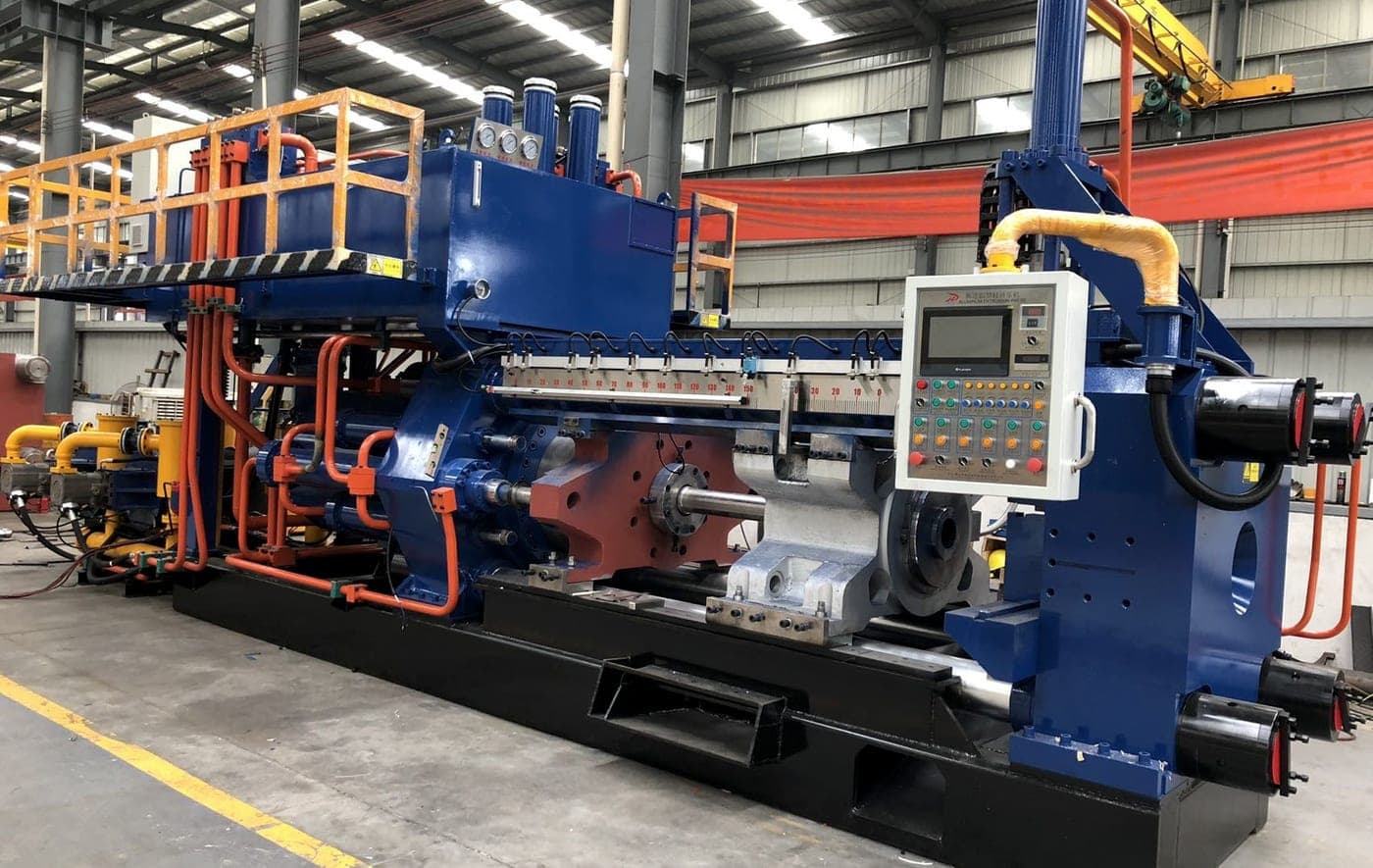
The heated billet is loaded into the press container and a hydraulic ram pushes it against the die with thousands of tonnes of force. The aluminium has nowhere to go but through the die opening — and it emerges on the other side as a continuous profile with the die's exact cross-section.
As the profile exits, it is gripped by a puller and guided down the runout table while being cooled with air or water. This quench matters: cooling rate is part of what determines the final mechanical properties, not just a housekeeping step.
Straightening, cutting and ageing
A freshly extruded length is never perfectly straight. The stretcher grips both ends and pulls the profile slightly beyond its elastic limit, straightening it and relieving internal stress. It is then saw-cut to ordered lengths — on our lines up to 12,000 mm.
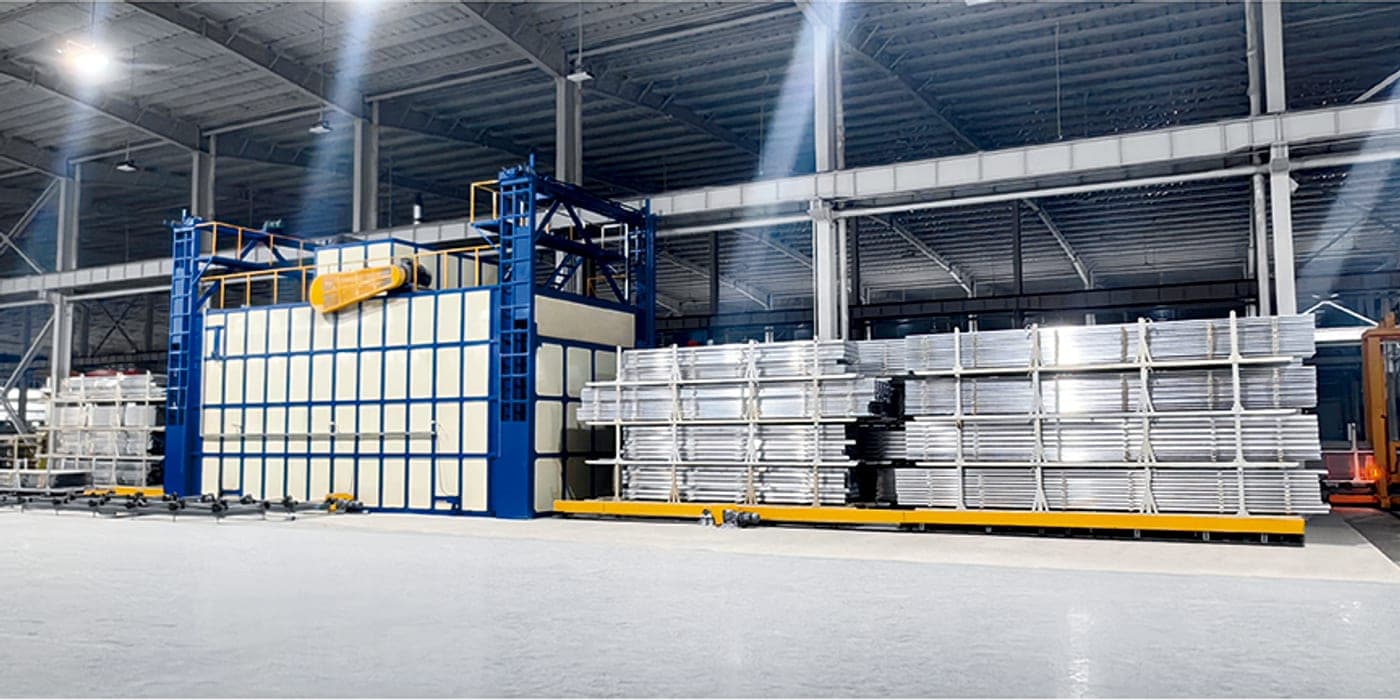
At this point the metal is still in a soft condition. Ageing ovens hold the profiles at temperature for several hours to reach the ordered temper — typically T5 or T6 — which sets the final hardness and strength. Skipping or shortcutting this stage is invisible on delivery day and very visible once the profile is load-bearing, which is why temper certificates are worth asking for.
After extrusion: machining and finishing
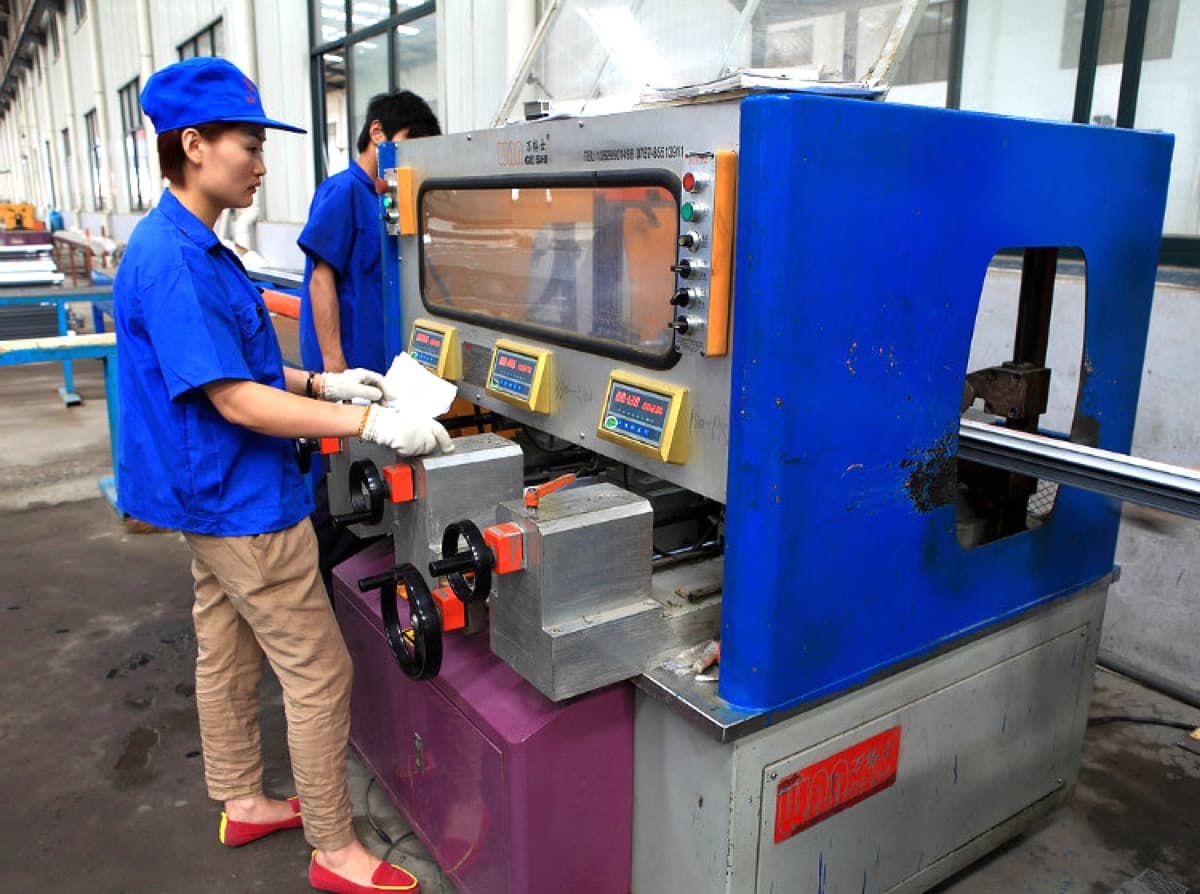
Most profiles are not finished when they leave the press. Depending on the order they move on to CNC machining (holes, notches, threads, cut-outs), anodizing or powder coating, and assembly operations. Doing this in-house means one supplier is accountable for the dimensions of the finished, machined part — not just the raw extrusion.
What this means for your order
Three practical takeaways for buyers. First, the die defines the profile: a new custom section means a one-time die, and small design changes are cheapest before the die is cut. Second, alloy and temper are process outcomes — specify them explicitly (for example 6063-T5 or 6082-T6) rather than assuming. Third, tolerances follow standards: for architectural work we hold EN 12020 as the reference, tighter where the drawing demands it.
Wall thickness deserves a note of its own: standard sections run from 0.7 mm walls, and small precision sections can go finer. If weight is critical, discuss wall reduction with the manufacturer early — it is a die decision, not a finishing decision.
Related
Profiles in this guide