Resources
Die cost and MOQ: when a custom profile pays off
Published 2026-09-22
The first quotation for a new aluminium profile usually has one line that stops the conversation: the die charge. Right below it sits a minimum order that looks arbitrary. Many buyers react by asking for a standard section instead, and sometimes that is exactly right. Just as often it trades a one-off cost for a cost paid on every metre for the life of the product. This is how we would think the decision through if we were on your side of the table.
The die charge buys a decision, not just a piece of steel
A new die is a disc of tool steel machined to your cross-section, but the steel is not really what you are paying for. The charge covers the design of the die around your section, making it, the trial pressing, and the correction work until the profile coming out of the press matches the drawing. Most of that is engineering time, and most of it happens before you see a single sample.
That is why the charge depends on the section rather than on the weight. Whether the section is solid, hollow or semi-hollow, how many voids it has, how thin the thinnest wall is, how big its circumscribing circle is — those set the die type and the amount of trial work. A light, intricate profile can need a far more demanding die than a heavy, simple one.
It also means the die charge is the cheapest moment to change anything. Every change to the section after the die is cut is, in practice, a new die. If there is a detail on the drawing you are not yet sure about, the week before the die is ordered is the week to settle it.
Where the minimum order actually comes from
A minimum order is not a sales policy dressed up as a technical one. Every press run has a fixed cost that does not care how much metal you order: fitting and heating the die, bringing the press to a stable condition, the first metres that go to scrap before the profile settles, cleaning the die afterwards. Spread over a small order, that fixed cost dominates the price per kilo.
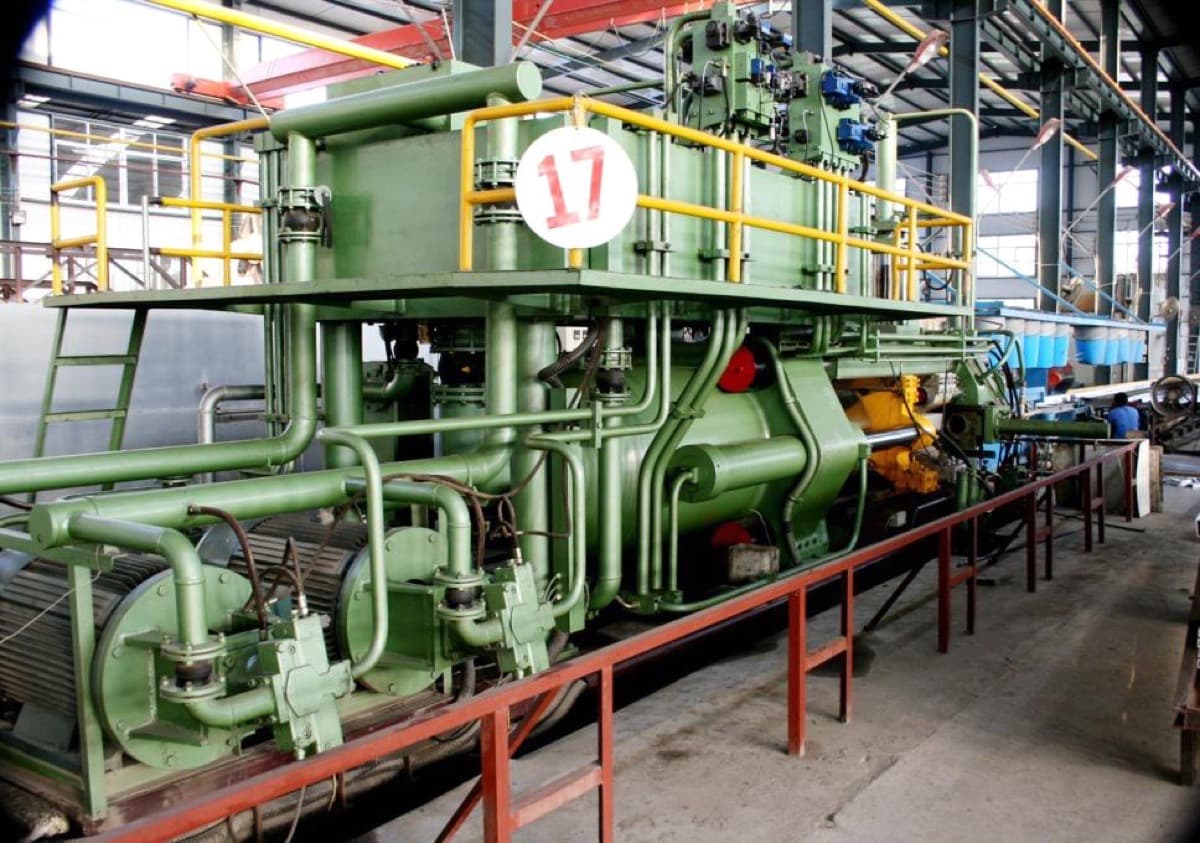
The press matters too. Our presses run from 600 to 6,500 t, and a section is run on the press that suits its size and shape. A small section on a small press and a large section on a large one have very different economics per run, which is why a single MOQ figure for every profile would be misleading. We quote a minimum per section and per finish, not one number for everything.
Finishing has a minimum of its own. An anodizing or coating batch has its own set-up, and a colour that is not already running on the line has to be set up for your order alone. So a small order in a standard finish and the same order in a special colour can land on quite different minimums — ask for the two to be quoted separately so you can see which one is driving it.
When an existing section is the better deal
If the profile's job is structural or functional and nobody sees it, an existing section is often the right answer. Framing and T-slot systems, tube, bar and angle, standard window and enclosure families — these exist so that buyers do not pay for tooling that has already been paid for. We re-run existing dies for repeat work for exactly that reason.
It is also the right answer when the volume is genuinely uncertain. A first order for a trial market, a project that may never repeat, a product still changing its design — in all of these, keeping cash out of tooling until the design has stopped moving is a sound decision, not a cheap one.
The honest caveat is what a near-enough section costs you. It is usually heavier than the part needs to be, because it was designed for someone else's load. It can need machining to remove or add features your own section would have had built in. And it can compromise the fit with the parts around it. None of that appears on the first quotation — it appears in the price per metre, in the machining line, and in assembly.
When a custom die pays for itself
The die charge is paid once. The weight of the section is paid on every metre, every order, for as long as the product sells. That asymmetry is the whole calculation. If a section designed for your part takes metal out of every metre, removes a machining operation or makes assembly simpler, the saving repeats and the die cost does not.
So compare lifetime cost, not first-order cost. Put the realistic annual volume next to the difference in weight per metre and the machining you would avoid, and the answer is often clear without anyone needing a spreadsheet. If the product is going to repeat, a custom die tends to win; if it is a one-off, it rarely does.
There is a second reason that has nothing to do with price. A section designed for your product is harder for a competitor to copy off the shelf, and it lets you build details — screw ports, clip channels, drainage, alignment features — into the extrusion instead of adding them later. For a product line rather than a single job, that is often worth as much as the metal saved.
The questions about the die nobody asks until the second order
Who owns the die once it is paid for, and is that written anywhere? A die charge on an invoice is not the same as a clause in the contract. If you ever want to move production, the answer to this question decides whether you can.
What happens when the die wears or breaks? Dies are consumable tooling. Ask in advance who pays to repair or replace it, and whether that changes depending on how much you have ordered through it. The time to agree this is before the first order, not when the second one is late.
Is any part of the charge credited back against volume, and on what terms? Some suppliers do this and some do not; either can be reasonable, as long as it is written down. And ask how long an unused die is kept before it is scrapped — a product that sells every second year needs a different answer from one that sells every month.
What to send with the enquiry, and when to push back
Send the drawing, the alloy and finish you have in mind, the first-order quantity and — just as important — a realistic annual volume and whether the product will repeat. The first-order figure tells a supplier what to put on the quotation; the annual figure tells them whether to recommend a new die at all.
Ask for the die charge, the sampling and the production price as separate lines, and the minimum quoted separately for the extrusion and for the finish. A single bundled figure is impossible to compare between suppliers, and it hides which part of the order is really driving the cost.
Push back when a die charge is quoted before anyone has looked at the drawing, when a standard section is offered without saying how much heavier it is than what you asked for, or when the minimum has no explanation behind it. And be prepared for us to push back too: if your volume does not justify a new die, we would rather say so and show you the existing sections that fit. Send us the drawing and your volume outlook, and we will tell you which route makes sense before you commit to either.
Related
Profiles in this guide