Resources
Anodizing vs powder coating — which finish to specify
Published 2026-07-22
Nearly every aluminium profile order ends with the same question: anodized or powder coated? Both protect the metal and both can look excellent — but they work in completely different ways, and the right choice depends on colour, environment and budget. Here is the comparison we walk customers through.
Two different ideas of a 'coating'
Anodizing is not a layer applied on top of the aluminium — it is the aluminium. An electrochemical bath grows the metal's natural oxide skin into a hard, porous layer that is then sealed (and optionally coloured). The finish is part of the metal itself: it cannot peel or flake.
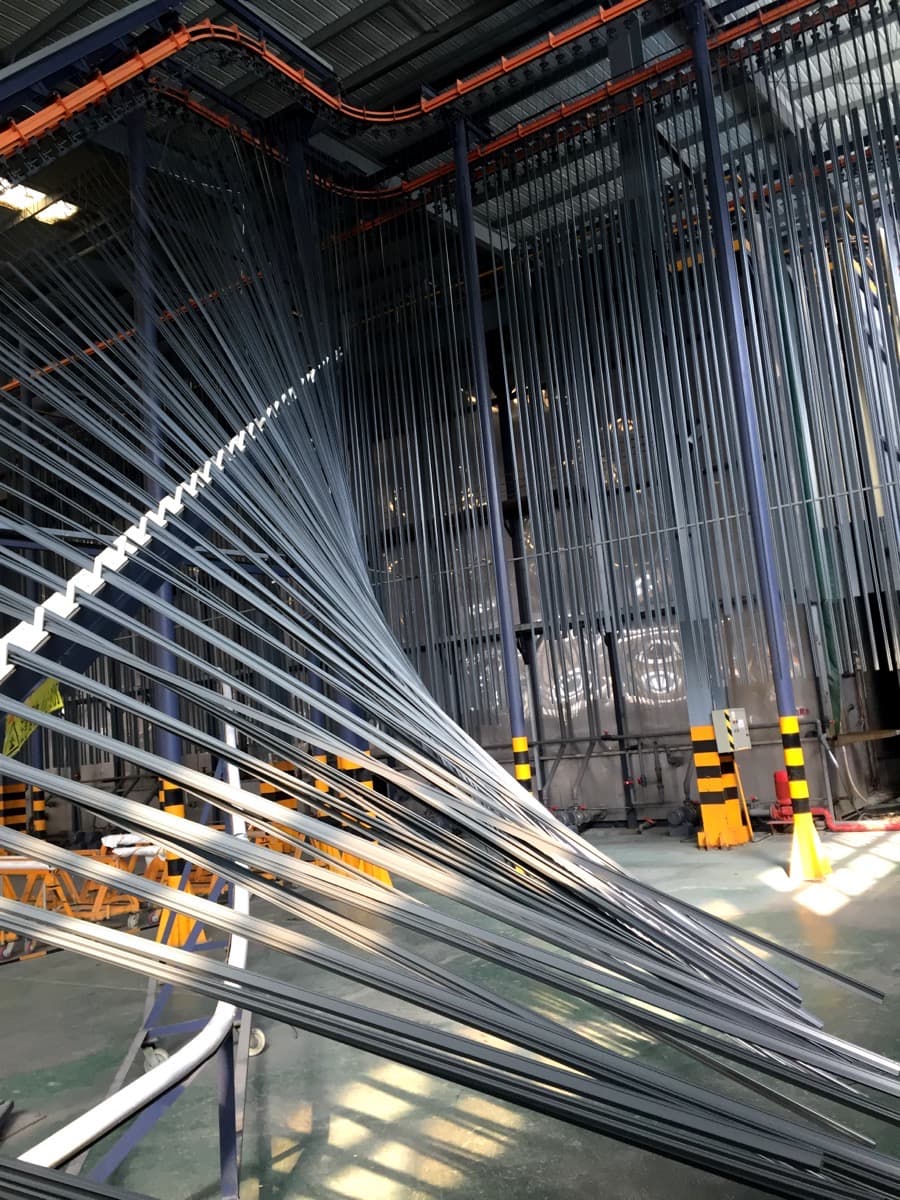
Powder coating is a true coating: electrostatically charged polymer powder is sprayed onto the profile and cured in an oven into a continuous film. It sits on the surface — which is precisely what makes unlimited colour possible.
Side by side
| Anodizing | Powder coating | |
|---|---|---|
| Appearance | Metallic, keeps the aluminium character; clear, champagne, bronze, black | Any RAL colour, matt to gloss, plus textures and wood-effect |
| Wear resistance | Very hard surface, excellent against abrasion | Good, but a thick film can chip at cut edges under impact |
| Corrosion protection | Excellent when properly sealed | Excellent, film thickness is the key variable |
| Colour consistency | Batch-to-batch shade variation is inherent to the process | Very repeatable between batches |
| Feel | Metal-cold, thin | Slightly soft, coated |
| Rework | Difficult — the finish is the metal | Strippable and recoatable |
Where anodizing wins
Choose anodizing when the metallic look is the point, when the surface will be handled or abraded daily (handrails, tool profiles, T-slot systems), or when the budget punishes repainting cycles. Architectural classics — clear and bronze anodize — also age gracefully: scratches reveal aluminium-coloured oxide, not a contrasting primer.
Its honest limitation is colour: the palette is metallic and narrow, and matching shades exactly across production batches is process-limited. If the façade drawing says 'consistent RAL 7016 across three shipments', that is a powder coating job.
Where powder coating wins
Choose powder for colour: exact RAL matching, high repeatability, matt, gloss, fine-texture and wood-grain effects. It is the default for window and door systems, curtain wall visible faces and any project where the architect specifies a colour code. Modern polyester powders hold colour outdoors for years, and thickness is easy to verify with a film gauge at goods-in.
Its limitations: the film can chip at impact points if the substrate preparation is poor, and a coated surface never quite has the metallic depth of anodize. For coastal or high-UV projects, say so in the enquiry — powder class and pre-treatment should be chosen for the environment.
Specifying it right
Whichever you choose, put three things in the specification: the finish and colour (anodize shade or RAL code), the minimum layer thickness in microns, and the environment the part lives in. We verify coating thickness and run salt-spray checks as part of standard quality control, and test reports are available on request — asking for them costs nothing and keeps every supplier honest.
Undecided between the two on a visible part? Ask for finished samples in both. A profile in the hand settles in minutes what datasheets argue about for days.
Related
Profiles in this guide